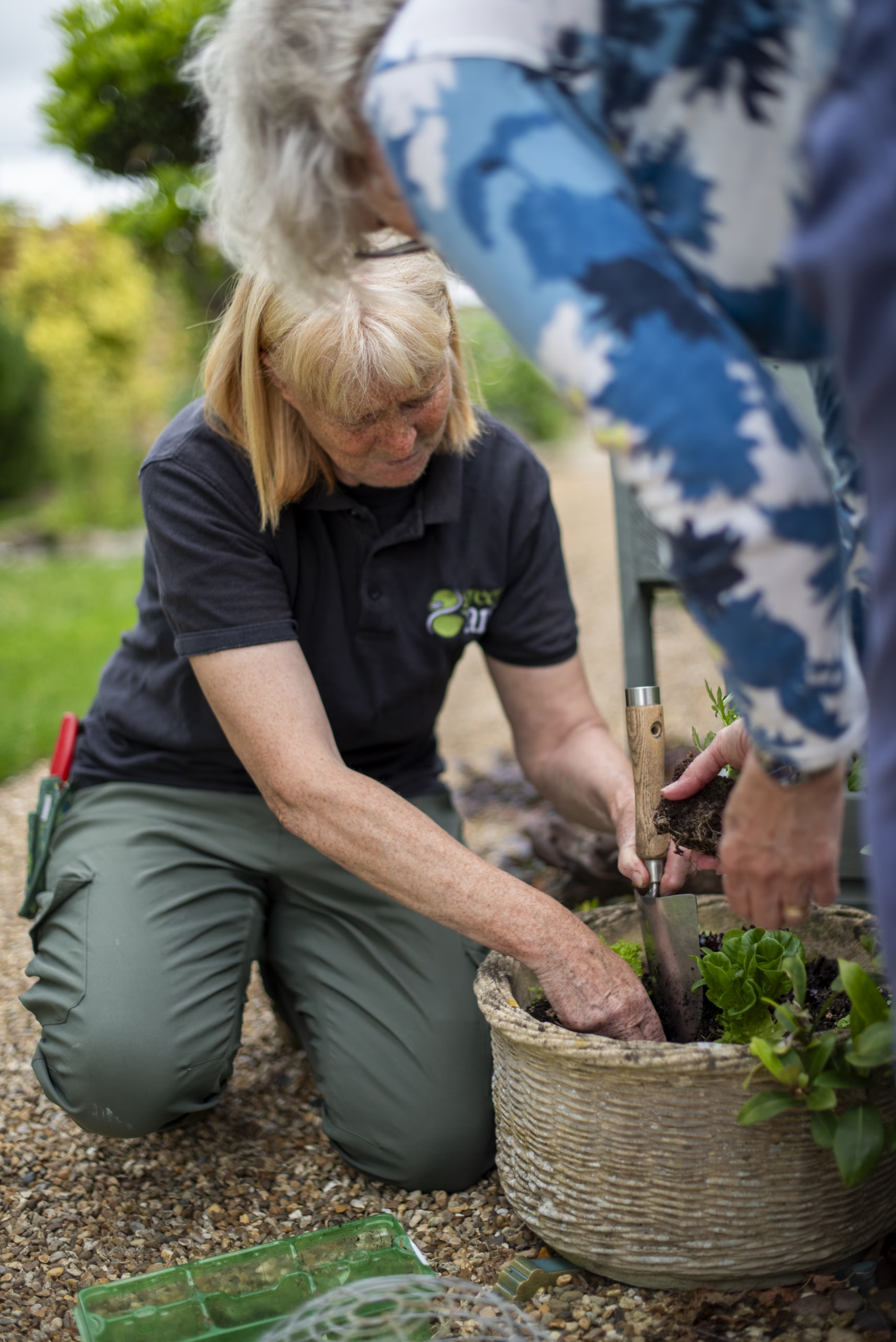
One-to-one Horticultural Therapy
Private, person-centred sessions in your own garden with a qualified horticultural therapist. For people navigating life's more difficult moments.

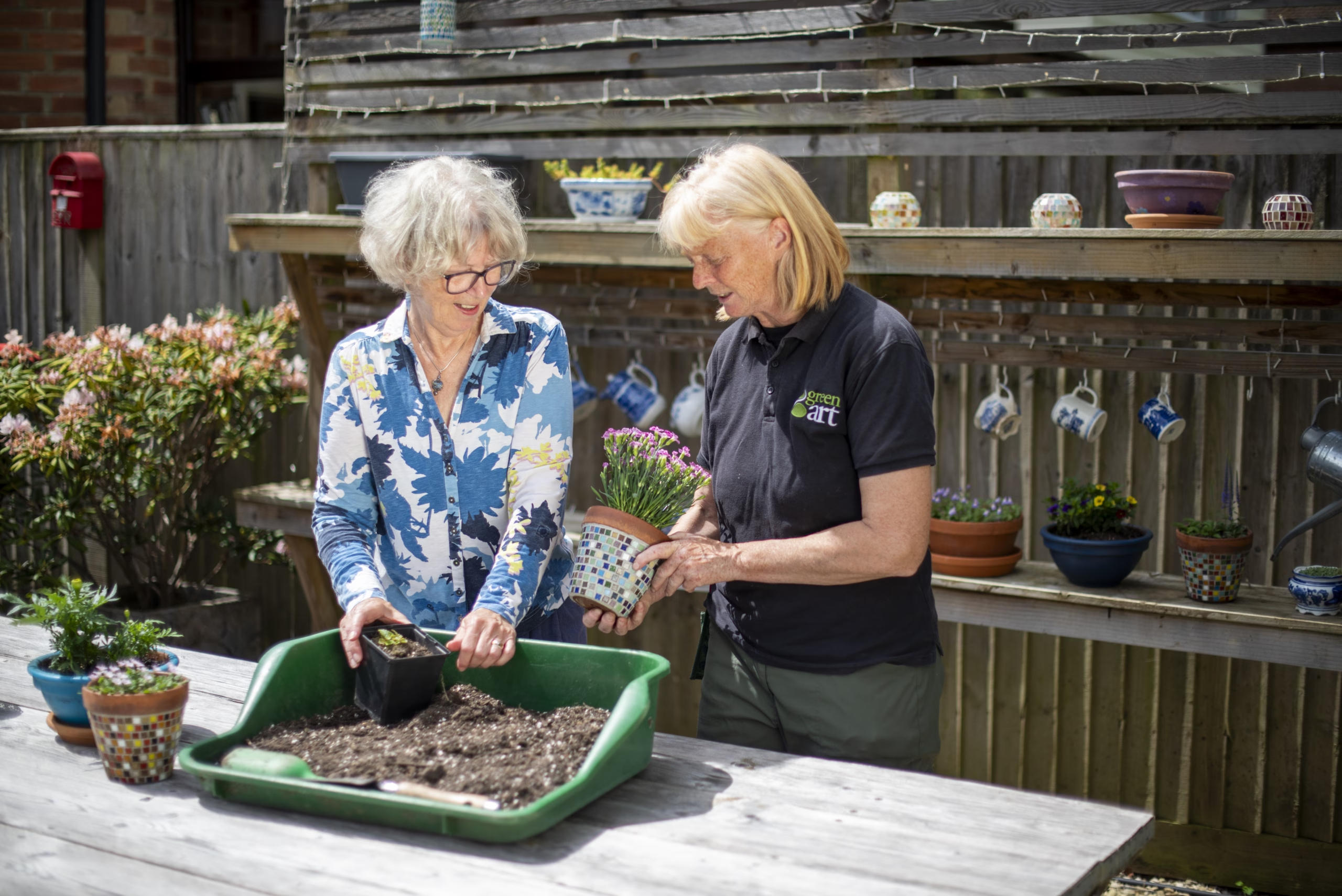
The evidence is clear: spending time in a garden is good for us — for mood, focus, stress, physical and mental health. For people going through life’s more difficult moments, horticultural therapy can help you find your way through.

Most of us know it, even if we have never quite put it into words. The way half an hour in the garden can reset a difficult day. The quiet focus that comes with planting, pruning or simply being outside. The calm that follows time spent around living things.
It is not just instinct. The evidence is now firmly behind what gardeners have always sensed. Research consistently shows that time in a garden lowers stress hormones, restores attention, lifts mood and supports physical health. The NHS recommends nature-based therapies. And the Royal Horticultural Society’s Gardening for Wellbeing Blueprint maps the science across seven dimensions of human health.
We call it Vitamin G.
Whether you need personal, one-to-one support in your own garden, or would benefit from getting outside and gardening alongside others, we have a service designed around you.
Private, person-centred sessions in your own garden with a qualified horticultural therapist. For people navigating life's more difficult moments.
Free six-week group gardening for wellbeing courses at Braziers Park, funded by Oxfordshire Community Foundation. → Register interest for 2027
We call it Vitamin G for gardening because just like sunlight supports Vitamin D, time in the garden can lift your mood, calm your mind and help you feel more present. Gardens offer a uniquely accessible way to connect with nature, right where you live.
Gardening lowers cortisol and supports emotional regulation. (Mind, 2018; University of Essex)
20 minutes outdoors can increase vitality and restore attention. (Journal of Environmental Psychology, 2010)
The hands-on rhythm of gardening quiets the mind and brings us into presence. (Kaplan's Attention Restoration Theory)
Bacteria in soil may support serotonin production, the same mechanism as some antidepressants.
Nature-based practices improve life satisfaction and sense of purpose, even in small doses. (University of Derby, 2020)
Horticultural Therapy is recognised by the NHS and recommended by NICE.

Garden Wellbeing sessions can benefit anyone, but they’re especially helpful if life feels busy, heavy or unsettled. If you’re craving a calmer headspace and a gentle reset, this can be a supportive place to start.
You might be feeling

Every gardener has their own rhythm. Are you a Busy Bee  , a Grounded Hedgehog
 , a Transforming Butterfly
 , or a Listening Ladybird
 ?
It’s playful, insightful, and a gentle way to reflect, wherever you’re starting from.
Take our 2-minute Garden Creature Quiz to:
A few words from people who asked us to make their gardens easier to enjoy and look after.
5.0 Rating based on 30+ Reviews
Here are a few of the things people usually ask us when they are thinking about working on their garden.


